

Sustainable Vape Hardware (V2)
Small Hardware Changes Can Create a Meaningful Sustainability Impact
You do not need to redesign your product to reduce its footprint. In cannabis vape hardware and packaging, the changes that move the numbers are small and specification-level: a recycled housing, two grams less plastic, one fewer bonded material, a carton that ships denser.

Need help with Sustainable Vape Hardware? Contact us
Why small changes outperform big gestures
Sustainability programs stall when they depend on a full product relaunch. New tooling, new certifications and new artwork push the work into next year, and next year the priority changes. A specification change does not wait: it runs on existing tooling, keeps your artwork, and shows up on the next purchase order. It also compounds. Two grams of plastic removed from a unit is nothing on a desk and roughly half a tonne across a 250,000-unit run. Ten percent less shipped weight is ten percent less freight burned on the same order.
- Runs on existing tooling, so there is no capital gate.
- Usually cost-neutral or cheaper, because you buy less material.
- Documentable, so claims survive a retailer or regulator asking.

Six hardware changes worth making first
These are the changes we see deliver measurable material, weight or waste reduction without disrupting the product a customer already recognizes.
Recycled and post-consumer materials
Recycled aluminum housings and post-consumer resin components replace virgin plastic on non-contact parts, cutting embodied carbon without touching the oil path or the tooling.
Less material per unit
Thinner walls, shorter sleeves and removed decorative layers reduce grams per unit. Lower mass means lower material spend and lower freight on every carton you ship.
Mono-material design
Fewer bonded materials in one part means the part can actually be recycled. Mono-material mouthpieces and pouches turn a theoretical recycling claim into a real one.
Rechargeable over disposable
Moving a line from disposables to a rechargeable battery with replaceable pods removes an entire battery and circuit from every repeat purchase.
Smarter secondary packaging
Recycled paperboard tubes, right-sized cartons and removed plastic windows cut waste at the shelf and fit more units per pallet.
Denser freight, fewer containers
Nesting, right-sizing and flat-packing raise units per container. Same volume shipped, fewer containers moved, measurably lower emissions per unit.
Price compression is inevitable. Quality compression is not.
Cheaper hardware usually means thinner materials in the wrong places, undocumented resins and higher failure rates — waste disguised as savings. A returned or leaking unit is the least sustainable product you can ship.
- Plastic avoided on a 250k run
- ~500 kg
- Freight saved per 10% weight cut
- 10%
- Tooling required
- Often none
From removing 2 g per unit
Proportional on the same order
Material and finish swaps reuse tooling
Figures are illustrative arithmetic based on per-unit weight change, not audited results. We model your actual bill of materials before you commit.
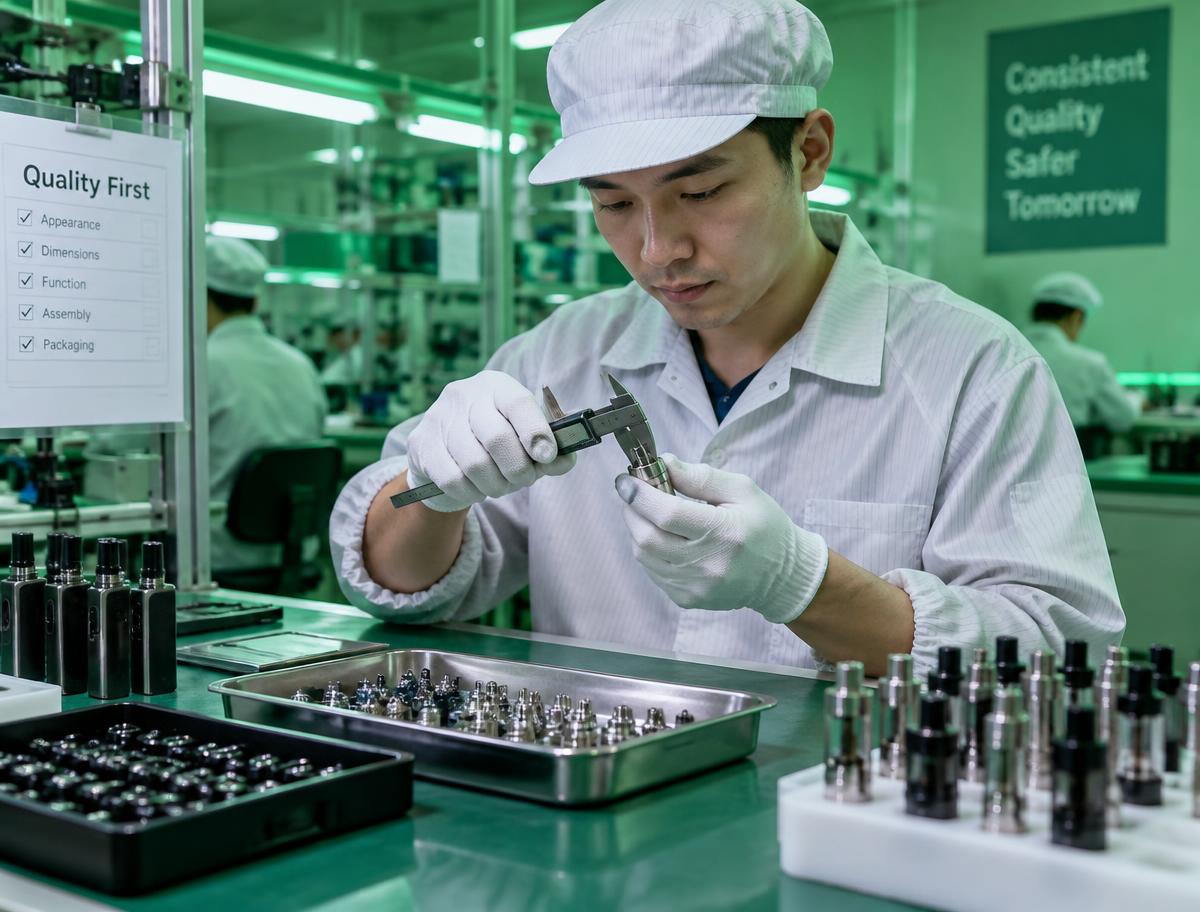
How a change gets made without risking the product
-
Audit the current bill of materials
We break your existing hardware into components, materials, weights and finishes, and mark which parts touch the formulation and which do not.
-
Model cost and impact together
Each candidate change gets a landed-cost delta and a material or weight delta so you see which changes pay for themselves.
-
Sample and validate
Factory samples are produced against the new specification and tested for fit, function, leak performance and finish before anything scales.
-
Lock the specification and document it
The approved change becomes a written specification with material declarations and test reports.
Where the changes usually live
Sustainable hardware: frequently asked questions
What counts as a small hardware change?
A change that keeps the product, tooling and user experience essentially the same: swapping virgin plastic for post-consumer resin, reducing wall thickness, or replacing a blister pack with recycled paperboard.
Does sustainable vape hardware cost more?
Not necessarily. Removing material and simplifying finishes usually lowers unit cost, and lighter parts reduce freight. We quote both versions side by side as one delivered DDP number.
Can recycled materials be used on parts that touch oil?
Oil-contact paths should stay food- or pharma-grade virgin material. Sustainability gains come from housings, mouthpiece shells, trays, inserts and packaging.
How do you verify recycled content and material claims?
Through GreencoastGO: we specify the material grade, collect factory declarations and test reports, and inspect production against those specifications.
Send us your current hardware spec
We will show you which small changes reduce material, weight and landed cost — with a delivered price, a lead time and a realistic minimum.